Observed signals
What a source or public page actually shows, with source and snapshot context.
Data / methodology / intelligence
DentalCensus combines public evidence with normalized profiles, historical change signals and cross-segment analysis. The result is more than a directory of open facts: it is a reusable intelligence layer for market, territory and customer-specific decisions.
Current public figures are dated snapshots. Collection is rolling and incremental; history stays visible.
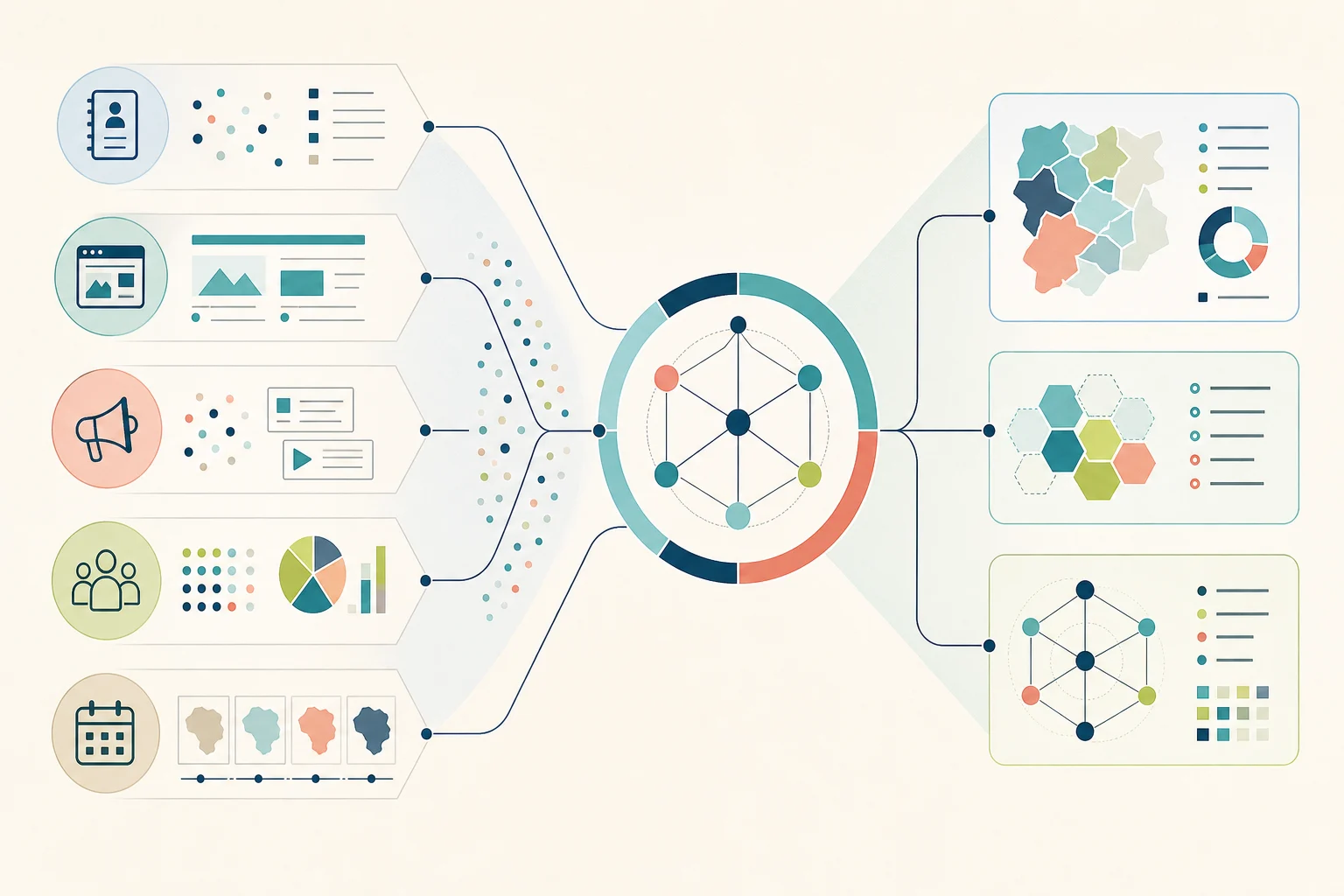
The Data Atlas
Each module answers a different commercial question. The value grows when signals are connected across practices, markets, networks, contacts and time.
Observed
Which practices fit the clinical thesis?
Observed
What technology context is visible?
Observed
Where is commercial activity already visible?
Derived
How is the market organized?
Snapshots
What is moving between snapshots?
Derived
Where should a commercial team focus?
Observed + linked
Who can a team engage next?
Derived
What only appears across the intersections?
What we build from the data
Our own value comes from resolving entities, preserving change and combining dimensions into a base market model. From there, AI agents and analysts can help configure customer-specific models around a decision.
What a source or public page actually shows, with source and snapshot context.
Normalized entities, historical change and intersections that no single source contains.
A decision-specific view configured around a territory, workflow, threshold or monitoring need.
How the model is made
The methodology is designed so a customer can understand where a signal came from, when it was observed and what was computed on top of it.
How hidden ownership networks are detected ↗Hidden dental networks: the measured layer ↗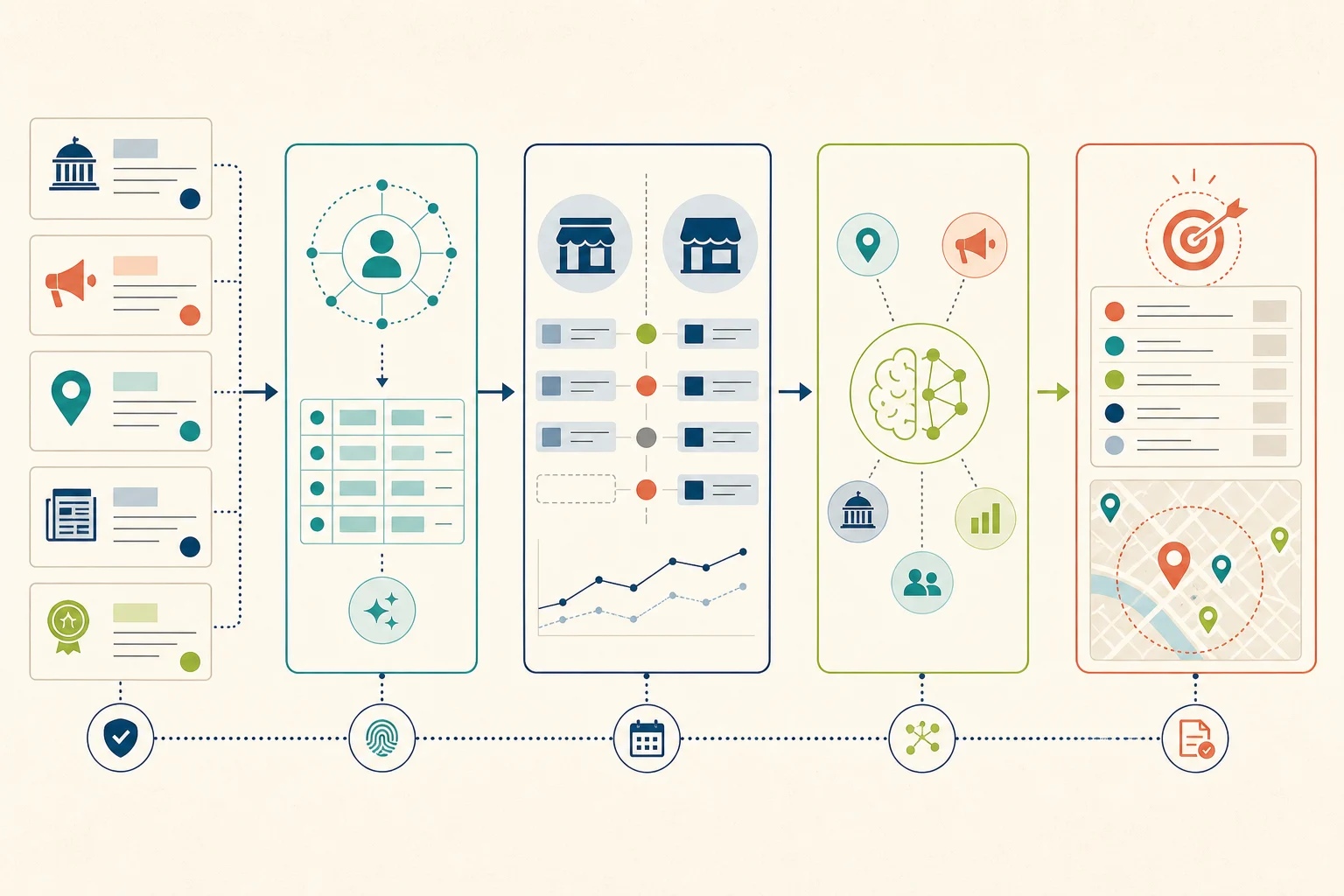
Methodology in six moves
Gather public directory, website, advertising and Census evidence.
Connect practices, networks, regions and people into reusable entities.
Keep fields, definitions, missingness and provenance explicit.
Retain dated snapshots so change can be measured instead of guessed.
Combine signals into market, territory and customer-specific intelligence.
Deliver a shortlist or view a commercial team can act on and validate.
Signal anatomy
Every useful output carries enough context to be challenged, refreshed and used in a commercial conversation.
See how the intelligence model works ↗Example output contract
Trust layer
Use the intelligence layer
Questions buyers ask
From our own crawl and enrichment pipeline: 101,000 clinic websites analyzed plus public sources, resolved to 103,674 US dental clinics. Website-derived flags mean 'the clinic says so on its site' — and are labeled that way.
Collection is rolling and incremental, with dated snapshots shipped as new versions. History is never silently rewritten, so you can compare snapshots over time.
Every detected attribute is tri-state: yes, no, or unknown. Unknown is never counted as 'no', and every percentage states its denominator. This is the core honesty rule behind all published numbers.
Yes — create a free account and search your market. No demo call required; paid plans add exports, deeper signals and API access.
Questions about coverage in your territory? Talk to us.